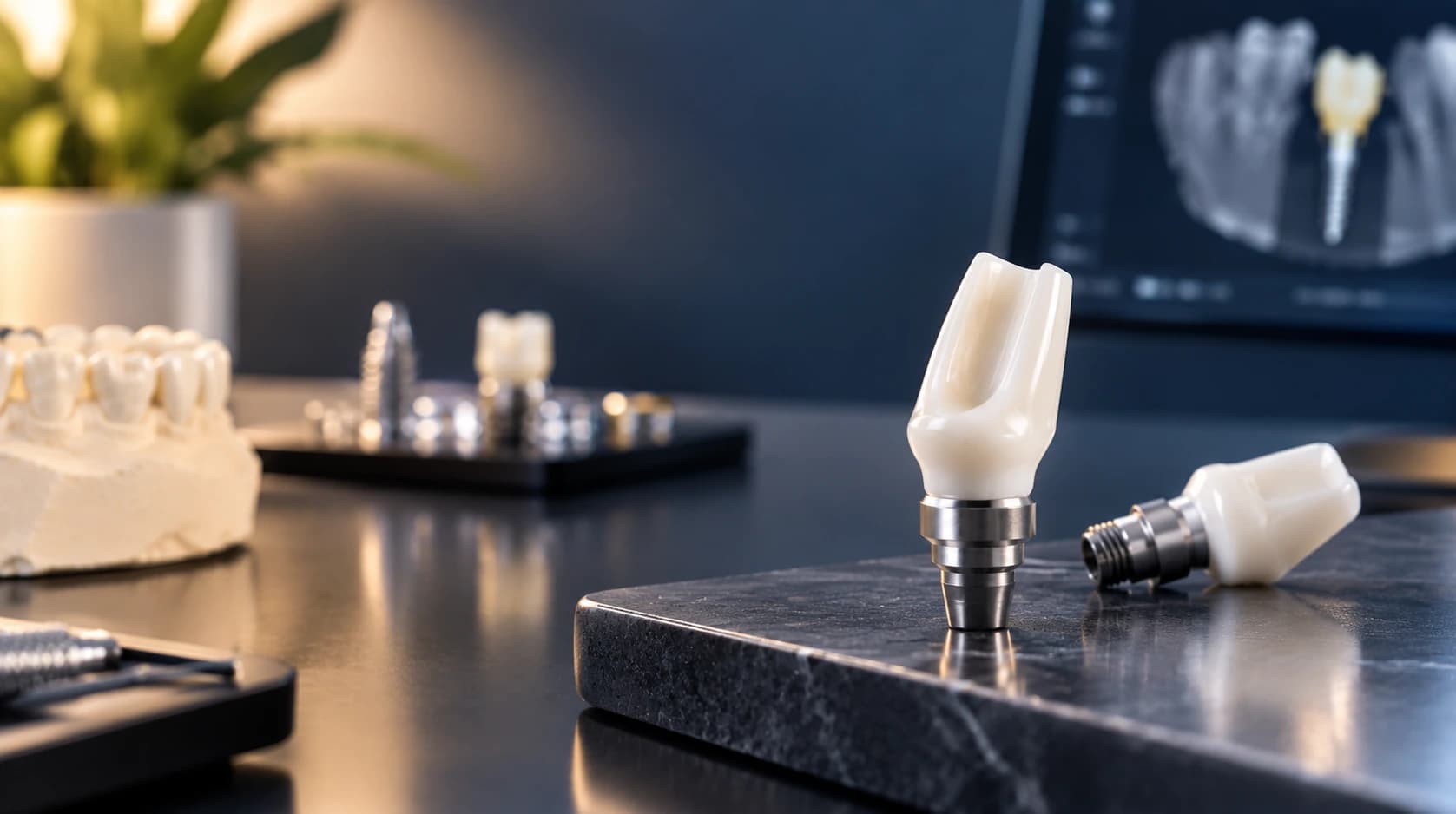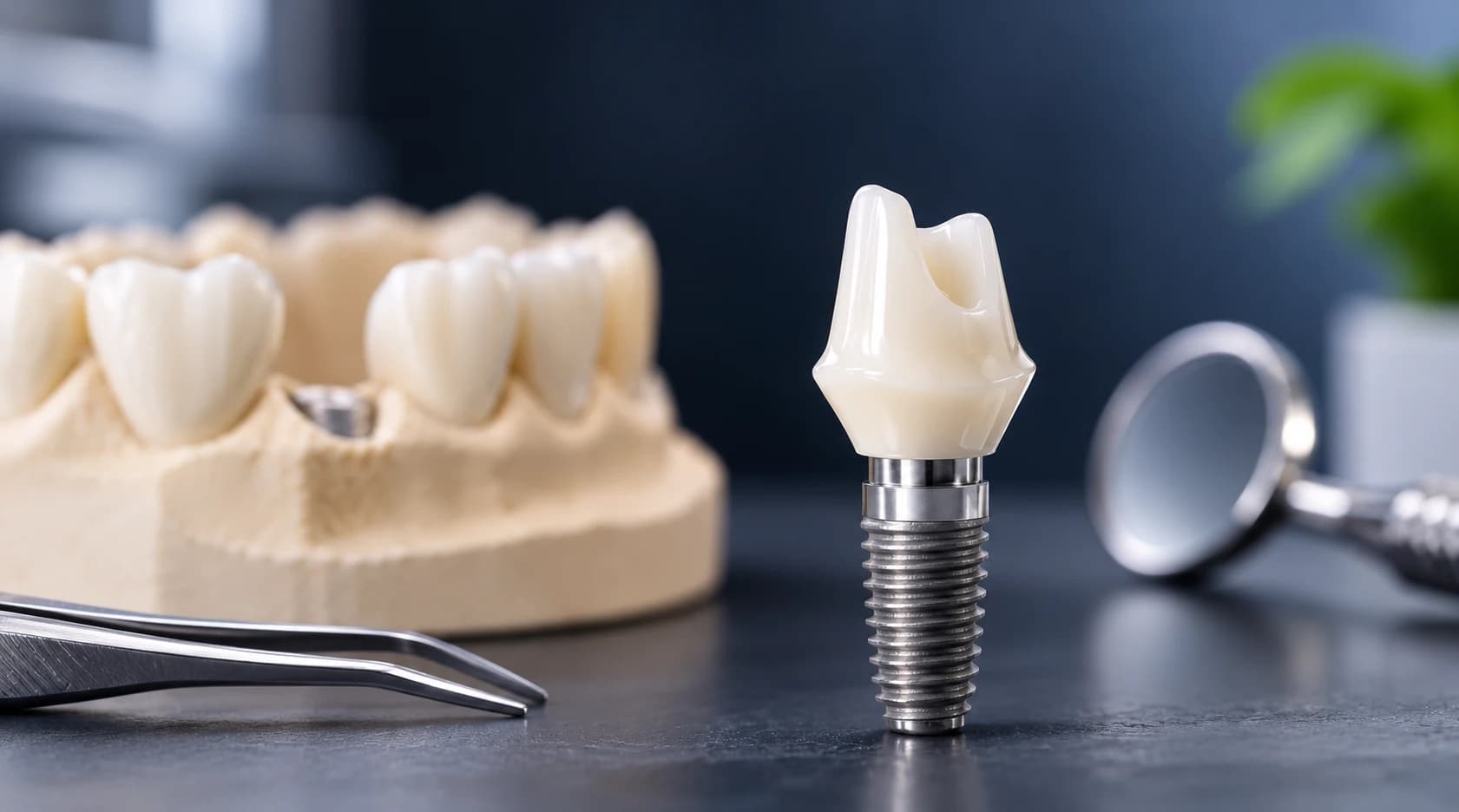
When planning an implant-supported crown, dentists must consider the components beneath the visible restoration. The abutment connects the implant to the crown and helps determine how the restoration fits within the available space.
A custom zirconia abutment may be worth considering when the case calls for individualized restorative design and careful esthetic planning. However, zirconia is not the right choice for every implant. Its suitability depends on the implant position, restorative demands, connection design, and the patient's clinical circumstances.
A closer look at these factors can help dentists make a more informed selection.
What Makes a Custom Zirconia Abutment Different?
An implant abutment provides the connection between the implant fixture and the prosthetic restoration. A custom abutment is designed around the requirements of the individual case, rather than using only a standard stock shape.
Zirconia is a ceramic material with a tooth-colored appearance. This can be useful in situations where the color of the underlying abutment may influence the appearance of the surrounding tissues or restoration.
Some custom zirconia abutments use a titanium base at the implant connection. These hybrid designs combine a zirconia component with a titanium interface. Their suitability depends on the specific product, implant system, and approved indications.
When Does Esthetics Influence Abutment Selection?
Esthetics can play a significant role in implant treatment, particularly when replacing a tooth in the visible part of the smile.
Visible Implant Sites
In the anterior region, the color of the components beneath the crown may affect the final appearance. Zirconia's tooth-colored properties can make it an option when managing this concern.
However, the final result depends on more than the abutment material. Crown shade, soft tissue thickness, implant position, restoration contour, and surrounding anatomy also influence esthetics.
Soft Tissue Considerations
The tissues surrounding an implant are part of the overall restorative outcome. The abutment's shape and surface, along with the restoration's contour and the patient's oral hygiene, may influence the peri-implant environment.
Choosing zirconia alone does not guarantee healthy tissue or prevent complications. Appropriate design, clinical technique, and ongoing maintenance remain important.
Zirconia Versus Titanium Abutments
Both zirconia and titanium have roles in implant dentistry. Choosing between them requires balancing esthetic priorities with mechanical and clinical requirements.
Zirconia: Its tooth-colored appearance may be advantageous in selected esthetic situations. However, ceramic components require appropriate design and handling. Their use must account for the mechanical demands of the case.
Titanium: Titanium is a well-established implant material. It may be preferred when the clinical situation, implant system, or mechanical requirements favor a metal abutment.
Zirconia on a titanium base: Hybrid configurations combine a zirconia component with a titanium connection. These products may offer a way to address esthetic requirements while retaining a titanium interface, provided the specific design is appropriate for the case.
No single material is universally superior. The dentist should consider implant location, loading conditions, restorative space, connection compatibility, and the manufacturer's instructions before selecting an abutment.
Why Custom Design Needs Careful Planning
Custom fabrication can help the restorative team account for individual implant positions and crown requirements. Still, customization is not a substitute for accurate planning.
Several questions deserve attention before fabrication begins:
- Is the implant positioned appropriately for the planned restoration?
- Is there sufficient space for the abutment and crown?
- Does the proposed design support the intended emergence profile?
- Is the implant connection compatible with the selected component?
- Does the material and design suit the loading conditions?
- Can the restoration be maintained and accessed appropriately?
These questions help connect the abutment design with the final clinical objective. They also make communication between the dentist and dental laboratory more productive.
The Role of Digital Design and Laboratory Collaboration
Digital records and CAD/CAM workflows can support the design and fabrication of custom abutments. They allow the laboratory team to work with case-specific information and plan the relationship between the implant connection, abutment, and crown.
The quality of the result still depends on the accuracy of the submitted records, appropriate design decisions, compatible components, and suitable manufacturing processes. The dentist and laboratory should clarify missing information before fabrication proceeds.
For dentists evaluating laboratory options, Synergy3D offers a zirconia hybrid custom abutment combining zirconia aesthetics with a titanium base. Its implant solutions provide further information for practices assessing whether this configuration aligns with their restorative requirements.
Making an Informed Abutment Decision
A custom zirconia abutment can be a useful option when individualized design and esthetic considerations are important. Yet the choice should reflect the entire implant restoration, not just the visible benefits of zirconia.
By evaluating implant position, tissue conditions, mechanical demands, component compatibility, and the intended crown design, dentists can make a more considered selection. Clear communication with the dental laboratory then helps translate the restorative plan into an appropriate fabricated component.