A crown remake implies another laboratory cycle, an additional patient appointment, and more chair time for your dental practice.
Sometimes, the problem is not the zirconia itself. It is the lack of important information before fabrication begins. An experienced zirconia lab knows that to understand the clinical requirements of the case, it needs more than a scan and a tooth number.
Clear prescriptions play a huge role in helping technicians interpret the dentist's intentions, identify potential issues, and make informed design decisions.
While no checklist can eliminate every remake, providing complete case information can help reduce avoidable misunderstandings and support a smoother restorative workflow.
Why Complete Laboratory Prescriptions Matter
A laboratory prescription connects clinical treatment planning with restoration fabrication. It communicates material preferences, shade requirements, occlusal considerations, and other details that may not be obvious from the digital records alone.
A study published in The Saudi Dental Journal reviewed 40,344 dental restorations and found that fit-related problems, including issues with margins and contact points, were common reasons for remakes.
This highlights the importance of accurate scans, proper preparation, and clear communication with the dental lab. Read the research .
Here are six details worth checking before submitting your next zirconia crown case.
-
Make Sure the Preparation Margins Are Visible
The technician needs a clear view of the prepared tooth's edges to design a well-fitting crown. If these edges are hidden by gums, saliva, blood, or errors in the digital scan, it becomes harder to determine where the crown should end.
Before submitting a digital case, it is important to inspect the preparation from different angles. Check whether the finish line is visible around the entire tooth and whether the scan contains sufficient detail.
If the margin is unclear, one should consider focusing on improving tissue management or capturing the missing information before sending the case. A laboratory cannot reliably reproduce details that the records do not capture.
-
Include the Right Occlusal Information
Occlusion influences how the restoration interacts with the opposing teeth. An incomplete or inaccurate bite record can complicate crown design and may contribute to additional chairside adjustments.
Submit the opposing arch and bite records required for the case. Also communicate relevant clinical considerations, such as heavy occlusal loading, existing wear, or specific functional requirements.
Do not assume that the technician can infer every preference from the scan. A short, precise instruction can provide useful context for the intended restoration.
-
Specify the Material and Shade Requirements
Zirconia is available in different formulations with varying strength and translucency characteristics. The appropriate choice depends on the restoration's location, functional demands, aesthetic expectations, and the manufacturer's recommendations.
Specify the requested zirconia type when clinically appropriate. For aesthetic cases, include the shade and any relevant characterization instructions.
Photographs can provide additional context, particularly for anterior crowns or restorations that must blend with neighbouring teeth. Include suitable shade-tab photographs when needed and communicate any dark underlying tooth structure that could affect the desired appearance.
-
Explain Contact and Contour Preferences
A crown must fit into the available space while maintaining appropriate proximal contacts and contours. However, the ideal design may depend on details that are not immediately apparent from the scan.
Tell the laboratory about existing food traps, rotated adjacent teeth, unusual contact requirements, or areas where contour needs particular attention.
For example, if a patient regularly experiences food packing between two teeth, mention this in the prescription. The information gives the technician a clearer understanding of clinical concern.
These instructions do not replace clinical assessment, but they help align the design with the dentist's intended outcome.
-
Check the Digital Files Before Submission
Digital workflows can simplify communication, but they still depend on complete, usable records.
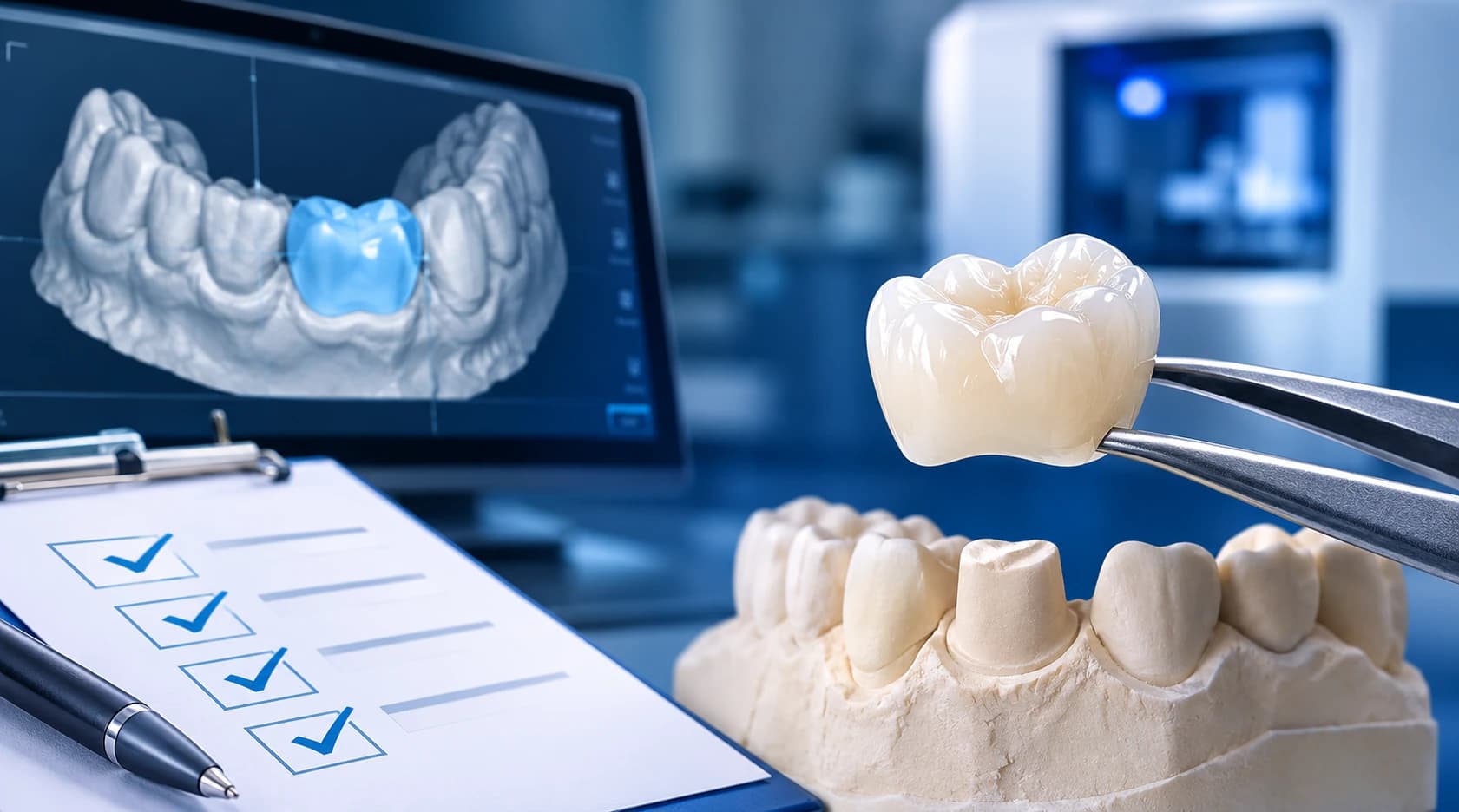
Before submitting a case, confirm that the preparation scan, adjacent teeth, opposing arch, and bite information are present where required. Check for missing surfaces, stitching errors, and incomplete interproximal details.
Also verify the tooth number, restoration type, and patient or case identifiers. Small administrative errors can create unnecessary clarification requests and delays.
A quick review before submission is often easier than correcting missing information after the design process has started.
-
Provide Clear Instructions for Special Cases
Some cases require additional information beyond a standard crown prescription. Implant-supported restorations, unusual preparations, limited clearance, and demanding aesthetic cases may need more detailed instructions.
Include relevant component information for implant cases, along with the prescribed retention method and any applicable design requirements. For complex aesthetic cases, provide photographs and specific shade or contour guidance.
If something about the case is unusual, communicate it directly rather than assuming the laboratory will identify the issue independently.
Work With a Zirconia Lab That Supports Your Workflow
Complete prescriptions are only one part of an effective dentist-laboratory relationship. Clear communication, compatible digital systems, and an organised submission process also matter.
Synergy3D offers zirconia crown fabrication through a digital laboratory workflow. Its published service information includes multiple zirconia material options, CAD/CAM manufacturing, and a five-business-day turnaround.
For practices looking to streamline case submissions, reviewing the laboratory's capabilities and submission requirements is a useful next step. Explore Synergy3D's zirconia crown service to learn more.
Conclusion
A successful zirconia restoration starts before fabrication. Visible margins, complete digital records, clear occlusal instructions, and specific material and aesthetic requirements help the laboratory understand the case.
By making prescription checks part of the submission routine, dentists can improve communication, identify missing information earlier, and help reduce avoidable delays and remakes. The goal is simple: give the zirconia lab the clinical information it needs to do its job well.