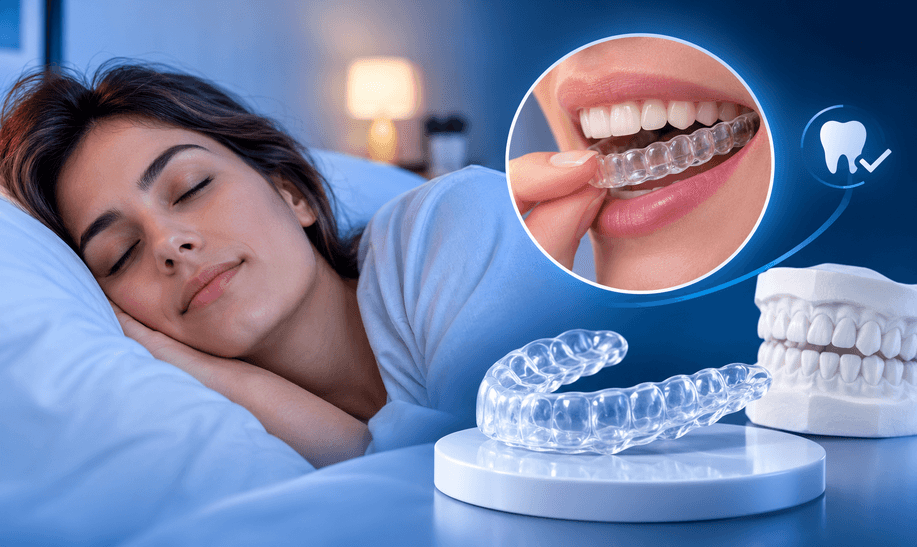
A patient receives a night guard, wears it for a few nights, and then stops using it. Despite the appliance appearing to fit correctly, it starts to feel bulky, creates pressure, affects the bite, or makes sleeping difficult.
This raises an important question for dentists: what makes a night guard comfortable enough for consistent use?
The answer is not limited to whether the appliance fits over the teeth. It includes design, thickness, occlusal contacts, material, and individual patient requirements.
A better understanding of these factors can help dentists identify potential problems before an appliance is delivered.
A Good Fit Is Only the Starting Point
A night guard should fit securely without creating unnecessary pressure. However, retention alone does not guarantee comfort.
Patients may have the feedback that the appliance feels too tight, presses against their gums, or creates an unfamiliar sensation when they close their mouths. In some cases, the appliance might also become difficult to remove.
These concerns can arise from several factors:
- Excessive pressure around the teeth or gingival margins.
- Overextended borders that irritate soft tissue.
- Uneven occlusal contacts.
- An appliance that feels too bulky for the patient's mouth.
- A design that does not account for the patient's individual bite.
A custom night guard should therefore be evaluated as a complete oral appliance, not simply as a protective covering.
Why Occlusal Contacts Matter More Than Patients Realise
How the opposing teeth get in contact with each other and with the appliance is one of the most crucial factors to take into account.
Certain teeth may get in contact early or exert more pressure than others due to uneven interactions. There is a possibility that patients feel as though their jaw feels unsettled, having an odd bite, or experiencing discomfort when they close their mouth.
For this reason, occlusal adjustment becomes a crucial component of clinical assessment. Dentists should assess how the opposing teeth contact the appliance and evaluate their movement during different jaw movements.
The objective is not to apply one universal occlusal scheme to every case. Instead, the design should reflect the patient's diagnosis, occlusal condition, and treatment plan.
Should a Night Guard Be Hard or Soft?
Material selection is a basic consideration. Patients have this assumption that a softer appliance equals more comfort. However, softness is not the only factor that determines suitability.
Soft appliances can offer a more resilient feel, while hard appliances allow more precise adjustment of occlusal contacts. Their suitability depends on the clinical indication, patient habits, and the dentist's treatment objectives.
For example, a patient with significant clenching habits may require a different approach from someone with relatively mild symptoms. Material selection should also consider durability, appliance thickness, and the forces it is expected to withstand.
There is no single material that works best for every patient. A custom night guard should be selected around the clinical requirements rather than comfort assumptions alone.
Can Digital Fabrication Improve Appliance Consistency?
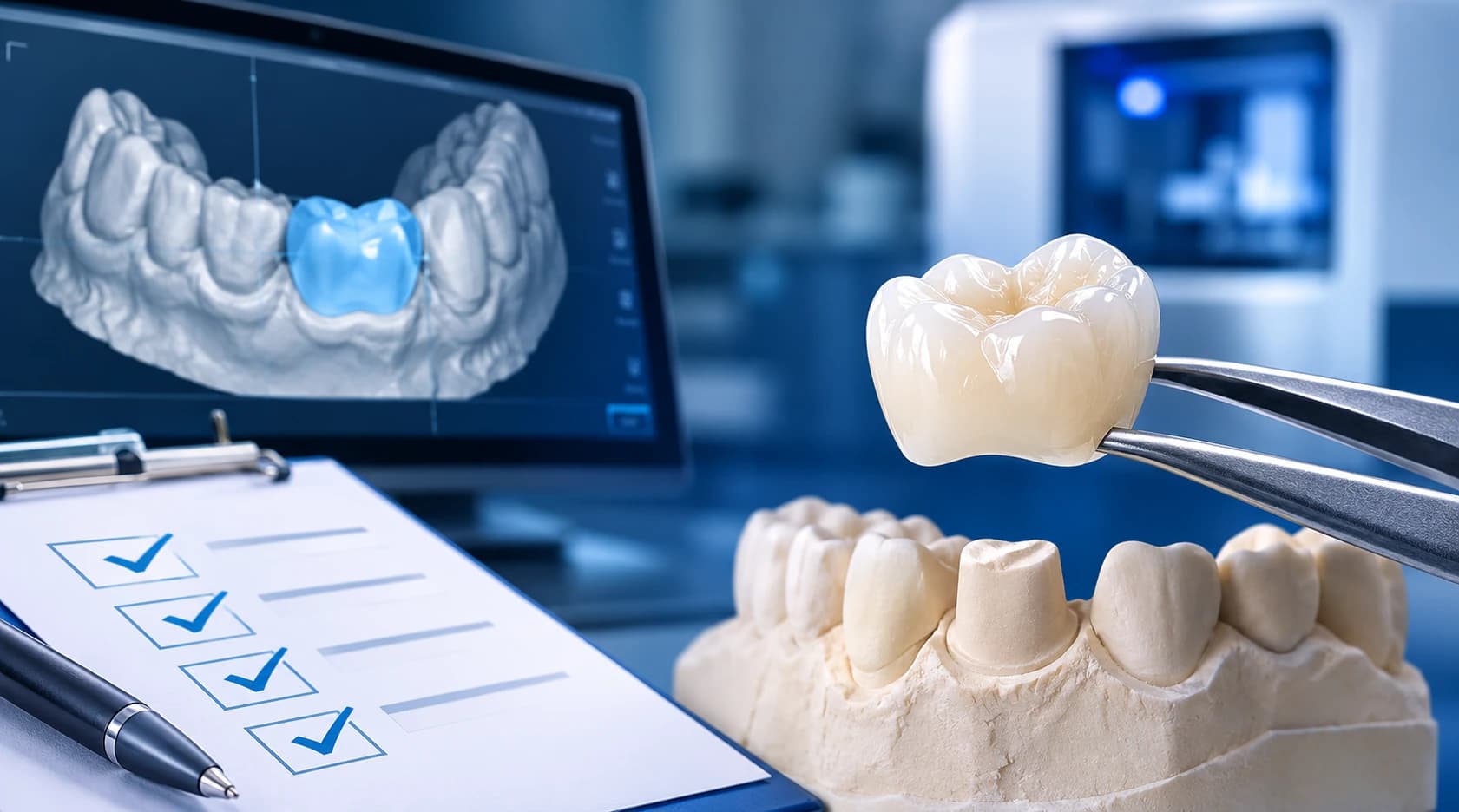
Traditional and digital fabrication methods have different contributions in creating occlusal appliances. Digital workflows introduce CAD/CAM design and manufacturing options that can support repeatable production and patient-specific geometry.
The foundation of the process is accurate digital records. The dental team uses the available information to design an appliance that follows the patient's dental anatomy and prescribed requirements.
Digital manufacturing can offer several practical advantages:
- More controlled appliance design.
- Consistent reproduction of the approved digital model.
- Better communication between the dentist and the laboratory.
- A digital record that can support future references or replacements.
However, it is to be noted that digital fabrication does not eliminate the need for clinical verification. The quality of the scan, prescription, design, and final adjustment all contribute to the result.
What Should Dentists Check Before Delivery?
Before delivering an appliance, dentists should evaluate more than its appearance.
A useful clinical checklist includes:
- Retention: Does the appliance seat securely without excessive force?
- Borders: Are the margins comfortable and free from unnecessary extensions?
- Occlusion: Are contacts appropriate for the prescribed design?
- Movement: Does the appliance allow the intended mandibular movements?
- Patient feedback: Does the patient experience pressure, irritation, or difficulty wearing it?
Patients should also receive clear instructions about insertion, removal, cleaning, storage, and follow-up appointments.
A More Thoughtful Approach to Night Guard Fabrication
Comfort is not a finishing detail. It is part of the appliance design process.
At Synergy3D, dentists can access custom-milled hard and soft night guards designed for bruxism and TMJ protection.
The laboratory's digital approach supports patient-specific appliance fabrication, while the dentist's prescription and clinical assessment guide the intended design.
Ultimately, a custom night guard should do more than cover the teeth. It should meet the clinical requirements of the case while remaining practical for the patient to wear.
When fit, material, occlusion, and communication are considered together, the chances of delivering an appliance that patients can comfortably incorporate into their routine improve.